

5 tokenization trends to watch for in 2026
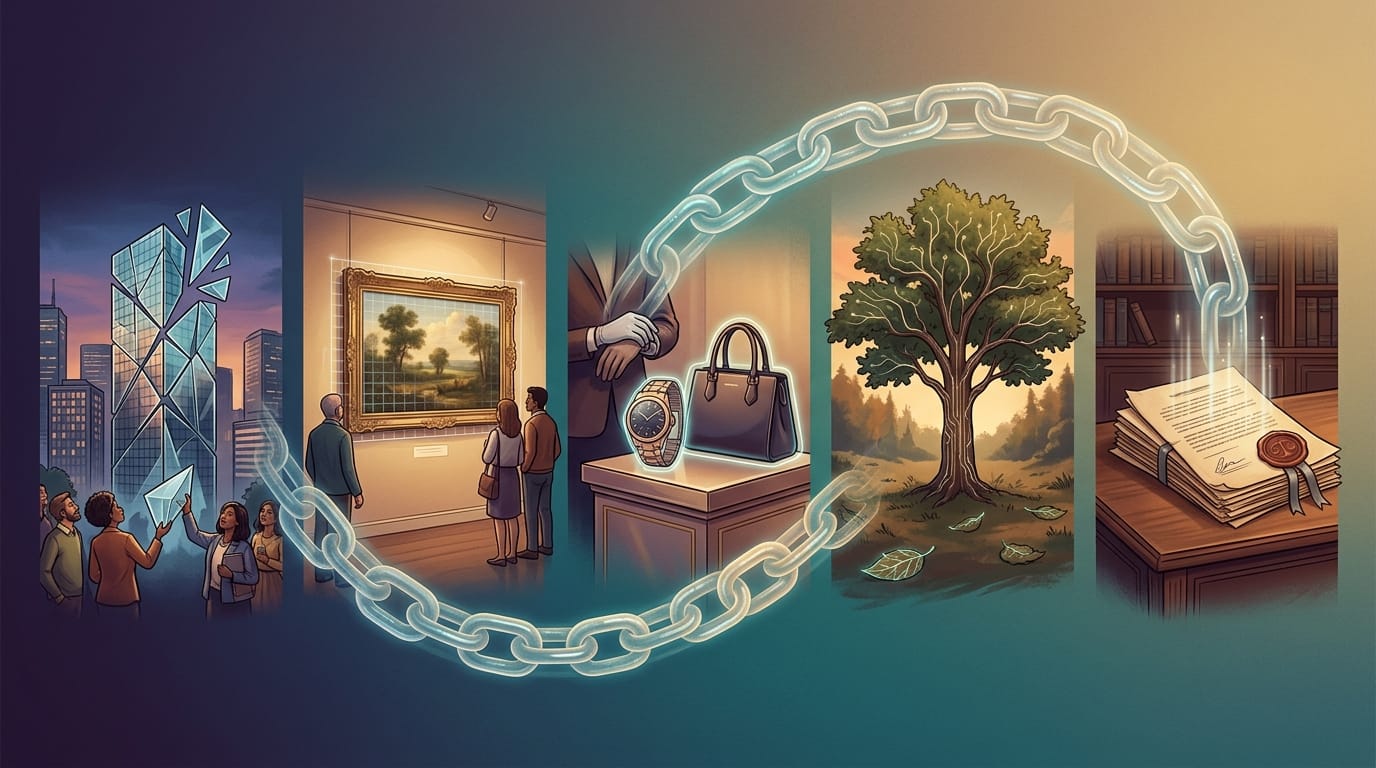
Tokenization is set to revolutionize multiple industries by providing more liquidity, transparency, and accessibility to traditionally high-value and illiquid assets.
Tokenization is set to revolutionize multiple industries by providing more liquidity, transparency, and accessibility to traditionally high-value and illiquid assets.
Tokenization trends in 2026 aren't a prediction anymore. The market crossed $24 billion in tokenized real-world assets by early 2026, growing 266 percent over the previous year, and the biggest institutions in finance, including BlackRock, JPMorgan, and Franklin Templeton, are now active participants rather than curious observers.
That growth hasn't been uniform, and it hasn't been free of failures. One of the most-cited names in tokenized real estate collapsed into liquidation this year. Some categories are scaling fast with institutional money behind them. Others are still mostly proof-of-concept. If any of the underlying terms here are new to you, the Crypto Glossary covers the basics before you dig in. Here's where five major tokenization trends actually stand right now, including the ones that didn't work out the way early coverage predicted.
Real estate tokenization has crossed real, measurable market value, not just pilot-stage interest, and one industry projection puts the space at roughly $4 trillion by 2035.
But the sector's cautionary tale matters just as much as its growth numbers. RealT, one of the earliest and most frequently cited names in tokenized real estate, announced voluntary liquidation in July 2026 after the city of Detroit sued its founders over hundreds of alleged code violations and unpaid taxes, rent distributions to investors stopped, and a court-appointed fiduciary discovered RealT didn't actually own some of the properties it had been collecting rent on. Roughly 14,000 to 22,000 investors were left splitting an escrow balance of about $640,000, and French investors are now pursuing class action litigation.
The lesson isn't that tokenized real estate doesn't work. RealT's smart contracts functioned exactly as designed the entire time. What failed was the property management, tax compliance, and disclosure behind them, which is a reminder that a tokenized deed is only as trustworthy as the operator managing the physical asset it represents. That's a theme worth keeping in mind across tokenized luxury goods too, where custody and authentication matter as much as the blockchain record itself.
What this means if you're considering it:
Masterworks remains the most established name in fractional art ownership. The platform buys blue-chip paintings, from artists whose auction history shows consistent price growth, then files an SEC-qualified offering to split ownership into shares priced at roughly $20 each. It now holds more than 500 paintings valued collectively above $1 billion, insured through Lloyd's of London and stored in climate-controlled facilities.
The core trade-off hasn't changed: fractional art ownership solves the entry-price problem, not the liquidity problem. Most holdings stay locked up for years while the underlying painting, hopefully, appreciates. That's part of a broader shift toward incorporating digital assets into an everyday investment portfolio as one slice of a diversified strategy rather than a fast-turnaround trade.
What's actually different in 2026:
Fractional ownership of high-value collectibles keeps expanding, but it's worth being precise about which platform tokenizes what, since this is one of the more commonly misreported corners of the tokenization world.
CurioInvest tokenized a Ferrari F12tdf, capping the offering at $1.1 million and pricing tokens at $1 each across 440,000 available tokens. In 2026, collectibles platform Beezie partnered with The Luxury Closet on a $5 billion tokenization initiative on Solana covering authenticated handbags and watches, including Hermès Birkin bags and Rolex GMT-Master II models, with items vaulted and authenticated before a digital token is issued against them.
What it teaches you:
Blockchain-based carbon credits went through a genuine boom-and-correction cycle. Trading volume in the voluntary carbon market fell from nearly $2 billion in 2021 to roughly $535 million by 2024, largely because early platforms let low-quality or already-retired credits get tokenized without enough verification.
What's left in 2026 is smaller but more rigorous. CarbonX became an inaugural licensee of the Tolam Earth tokenization platform for digital environmental assets, pairing its existing carbon-impact calculation tools with actual on-chain issuance. Verra, the leading carbon credit registry, is now integrating blockchain verification directly through a partnership with Hedera Guardian and issued its first digitally verified carbon credits in 2026. Regen Network runs its own purpose-built registry and has expanded into biodiversity credits alongside carbon.
What changed since the last hype cycle:
IPwe, working with IBM and Casper Labs, converted roughly 25 million patents into NFTs on a hybrid Casper and Hyperledger Fabric network, giving patent holders a way to represent ownership, licensing terms, and prior art history as verifiable on-chain records. The goal is to make patents easier to license, value, and trade, rather than sitting in a filing cabinet as an illiquid legal asset most companies never actively monetize.
This trend is earlier-stage than real estate or art tokenization, and most activity so far is about verifying and organizing patent data on-chain rather than active secondary trading of patent shares. Still, it's a meaningfully different use case: tokenization applied to legal ownership records instead of a physical or financial asset, similar in spirit to how blockchain is already changing industries well outside of crypto trading.
What it teaches you:
If you zoom out from these five categories, the fastest-growing corner of tokenization in 2026 isn't any of them. It's tokenized U.S. Treasuries and money market funds, which crossed roughly $9.6 billion in value with 120 percent year-over-year growth. BlackRock's BUIDL fund alone represents close to $1.7 billion of that, and Franklin Templeton's tokenized money market fund is accessible through regulated platforms.
That matters for context: the five trends above get most of the headlines because they're easier to picture (a building, a painting, a patent), but the largest, fastest-growing pool of institutional tokenization money right now is going into the least glamorous asset class of all. Some analysts have floated tokenized Treasuries as a future on-ramp for pension money too, a question already being asked in could crypto take over pension funds in these 7 countries. It's also a reminder that 5 regulations that could shape the future of digital assets matter more for tokenization's next phase than any single platform does, since institutional money moves toward regulatory clarity first.
Tokenization is set to revolutionize multiple industries by providing more liquidity, transparency, and accessibility to traditionally high-value and illiquid assets. As we look ahead to 2025, the expansion of tokenized real estate, art, luxury goods, sustainability investments, and intellectual property will reshape the way we think about ownership and investment.
Asset tokenization is the process of converting ownership of a real-world asset, like real estate, art, or a patent, into digital tokens recorded on a blockchain. Each token typically represents a fractional ownership share or a verifiable record of the underlying asset.
The blockchain part of tokenized real estate tends to work as designed. The risk sits in the property management, legal structure, and disclosure behind the token, which is exactly what went wrong with RealT's 2026 collapse. Checking who legally holds title to the property, and whether distributions have actually been paid on schedule, matters more than the technology itself.
By dollar value, tokenized U.S. Treasuries and money market funds are growing the fastest, crossing roughly $9.6 billion with 120 percent year-over-year growth. Real estate and commodities tokenization are also expanding quickly, while carbon credit tokenization has shrunk in volume since 2021 but become more credible.
It depends on the platform. Some tokenization platforms operate more like a traditional brokerage and accept regular fiat payments, while others are built directly on public blockchains and require crypto to buy and hold tokens.
No. RealT's 2026 liquidation is a clear example of a platform where the technology worked but the underlying operations didn't. Before investing in any tokenized offering, it's worth checking who legally owns the underlying asset, how distributions have actually been paid historically, and whether the platform is transparent about fees and holding periods.

We explain crypto in plain, simple language with no hardcore technical stuff, so getting started feels easy, not overwhelming. Educational content only, not financial advice.
Buy, sell, and trade crypto on the go with RockWallet.